Yasuko
A Pale View of HillsYasuko is an offstage character in A Pale View of Hills, known through Sachiko and Mariko’s references to her household and its cats. Her home emerges as a possible destination for mother and daughter, and the prospect of returning there becomes entangled with Mariko’s hope of keeping the kittens.
Identity and Background
The novel gives little direct information about Yasuko herself. Mariko addresses her as Yasuko-San and says that she and her mother are going to live with her again, indicating that the household is familiar to them and that they have lived there before. The account does not describe Yasuko’s character, her current circumstances, or her own response to their planned return.
Mariko also explains that Maru, the cat whose kittens are at issue, had belonged to Yasuko before Sachiko and Mariko took her. This prior connection makes Yasuko more than a prospective host: in Mariko’s understanding, the kittens have a claim on the household through their mother’s earlier ownership.
The Planned Return
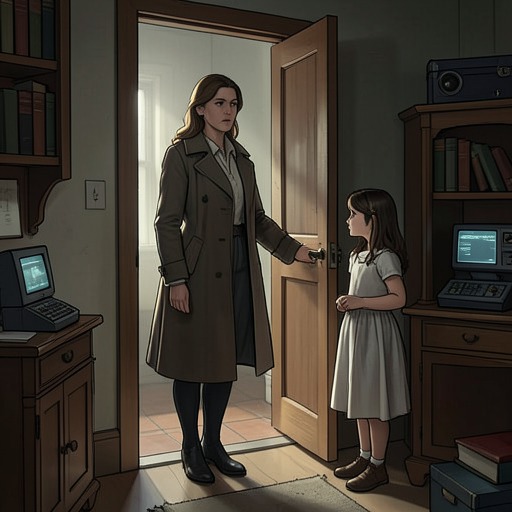
During an afternoon with Etsuko, Mariko asks whether Etsuko has been told that she and Sachiko will live with Yasuko again. Sachiko has told her, but the exchange presents the arrangement as a plan rather than a completed move. Mariko asks whether she will like living there again, and soon turns to what the household might mean for the kittens.
The prospect of Yasuko’s home belongs to a wider pattern of uncertain arrangements for Mariko’s care. Earlier, Sachiko considered asking Etsuko’s friend Mrs. Fujiwara about work at her noodle shop, where Mariko might help. Etsuko’s concern was who would look after the girl during the day and whether Mariko should be at school instead. Against that unsettled possibility, returning to Yasuko’s household offers a different setting for mother and daughter, though the novel does not establish what practical support Yasuko will provide.
Cats and the Limits of Mariko’s Hope
Mariko believes there may be room for the kittens at Yasuko’s house because, as she says, Yasuko likes cats. She also argues that Maru had been Yasuko’s cat before Sachiko took her, and therefore the kittens belong there too. Her reasoning treats the animals not simply as a burden to be transported, but as part of a continuing bond with the household they may rejoin.
Sachiko does not confirm that the kittens can stay. She replies that they will have to see what Yasuko’s father says. The qualification places the decision beyond Mariko’s control and shows that Yasuko’s affection for cats, as Mariko describes it, cannot settle the matter by itself. The scene leaves both the father’s answer and the kittens’ future unresolved.
Narrative Significance
Yasuko’s importance lies less in any direct action than in the possibilities attached to her home. Mariko imagines it as a place where the kittens might be welcome; Sachiko’s response reminds her that another adult’s permission may determine whether that hope is realized. Yasuko remains absent from the exchange, so the reader encounters her through what Mariko believes about her and what Sachiko says must still be negotiated. That distance keeps the planned return provisional and makes the household’s welcome an open question rather than a guaranteed refuge.